

Surfactants play a crucial role in the ink industry, influencing various properties of inks such as wetting, spreading, dispersion, and stability. As a surfactants supplier, I have witnessed firsthand the importance of these compounds in formulating high - quality inks. In this blog, we will explore the different types of surfactants used in the ink industry, their functions, and how they contribute to the overall performance of inks.
Types of Surfactants Used in the Ink Industry
Anionic Surfactants
Anionic surfactants are one of the most commonly used types in the ink industry. They have a negatively charged hydrophilic group. Examples include alkyl sulfates, alkyl benzene sulfonates, and phosphate esters. These surfactants are excellent wetting agents, reducing the surface tension of the ink and allowing it to spread evenly on the printing substrate.
Alkyl sulfates, for instance, are widely used in water - based inks. They can effectively disperse pigments in the ink formulation, preventing agglomeration and ensuring a uniform color distribution. The negatively charged head groups of anionic surfactants interact with the positively charged sites on the pigment particles, creating a stable dispersion.
Cationic Surfactants
Cationic surfactants carry a positive charge on their hydrophilic group. Quaternary ammonium salts are typical examples of cationic surfactants used in the ink industry. They are often used in specialty inks, such as those for electronic printing applications. Cationic surfactants can improve the adhesion of the ink to certain substrates, especially those with negatively charged surfaces.
In addition, they can act as antimicrobial agents in inks, preventing the growth of bacteria and fungi, which is particularly important for inks used in food packaging or other applications where hygiene is crucial. However, cationic surfactants are generally more expensive than anionic surfactants, and their use is more limited due to potential compatibility issues with some anionic components in the ink formulation.
Non - ionic Surfactants
Non - ionic surfactants do not carry a charge. They are composed of a hydrophilic group, usually a polyether chain, and a hydrophobic group. Polyethylene glycol esters and ethers are common non - ionic surfactants used in the ink industry.

Non - ionic surfactants are known for their excellent emulsifying properties. They can form stable emulsions in oil - in - water or water - in - oil ink systems, allowing for the combination of immiscible components. They also have good compatibility with other types of surfactants and additives, making them versatile in ink formulation. Non - ionic surfactants can reduce the surface tension of the ink without causing significant changes in the pH of the system, which is beneficial for maintaining the stability of the ink.
Amphoteric Surfactants
Amphoteric surfactants have both acidic and basic functional groups, which means they can carry either a positive or a negative charge depending on the pH of the solution. Betaines and imidazoline derivatives are examples of amphoteric surfactants used in inks.
These surfactants offer unique properties, such as good solubility over a wide pH range and excellent compatibility with other surfactants. They can be used to adjust the surface properties of the ink and improve its wetting and spreading characteristics. Amphoteric surfactants are also less likely to cause skin irritation compared to some anionic and cationic surfactants, which is an advantage in inks used for applications where human contact is possible.
Specialized Surfactants in the Ink Industry
Fluorosurfactants
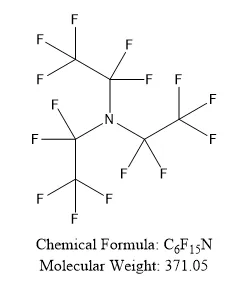
Fluorosurfactants are a special class of surfactants that contain fluorocarbon chains. They are known for their extremely low surface tension and high chemical and thermal stability. Perfluorotriethylamine is an example of a fluorosurfactant used in the ink industry.
Fluorosurfactants can provide excellent wetting on difficult - to - wet substrates, such as plastics and metals. They can also improve the leveling and flow properties of the ink, resulting in a smooth and uniform print surface. In addition, ≥95% Perfluorotriethylamine CAS NO.359 - 70 - 6 can enhance the water and oil repellency of the printed ink, which is useful for applications where resistance to moisture and contaminants is required.
Silicone - based Surfactants
Silicone - based surfactants have a silicon - oxygen backbone. They offer unique surface properties, such as low surface tension, high lubricity, and good thermal stability. These surfactants can improve the release properties of the ink from printing plates or rollers, reducing the risk of ink transfer problems.
Silicone - based surfactants can also enhance the gloss and smoothness of the printed surface. They are often used in high - quality graphic arts inks and inks for packaging applications where a high - quality finish is desired.
Functions of Surfactants in the Ink Industry
Wetting and Spreading
One of the primary functions of surfactants in inks is to improve wetting and spreading. By reducing the surface tension of the ink, surfactants allow it to spread evenly over the printing substrate. This is essential for achieving a uniform print quality, as uneven wetting can lead to streaks, voids, or poor color density.
Dispersion of Pigments
Surfactants help in dispersing pigments in the ink. Pigment particles tend to agglomerate due to their high surface energy. Surfactants adsorb onto the surface of the pigment particles, creating a steric or electrostatic barrier that prevents them from coming together. This ensures a stable dispersion of pigments in the ink, resulting in consistent color and print quality.
Emulsification
In inks that contain both oil and water phases, surfactants act as emulsifiers. They stabilize the emulsion by reducing the interfacial tension between the oil and water phases. This is important for maintaining the homogeneity of the ink and preventing phase separation during storage and printing.
Stability and Shelf - life
Surfactants can contribute to the overall stability of the ink. They can prevent the sedimentation of pigments, the growth of microorganisms, and the degradation of other components in the ink. By maintaining the physical and chemical properties of the ink over time, surfactants help to extend its shelf - life.
Case Studies
Let's take a look at some real - world examples of how surfactants are used in the ink industry. In a water - based flexographic ink used for packaging applications, an anionic surfactant was added to improve the wetting of the ink on the plastic substrate. The surfactant reduced the surface tension of the ink, allowing it to spread evenly and adhere well to the plastic film. As a result, the print quality was significantly improved, with sharper images and more uniform color.
In a UV - curable ink for screen printing, a silicone - based surfactant was incorporated to enhance the release properties of the ink from the screen. This reduced the occurrence of ink sticking to the screen, improving the printing efficiency and reducing waste.
Conclusion
Surfactants are indispensable in the ink industry. They offer a wide range of functions, from wetting and spreading to dispersion and emulsification. Different types of surfactants, including anionic, cationic, non - ionic, amphoteric, fluorosurfactants, and silicone - based surfactants, each have their own unique properties and applications.
As a surfactants supplier, we are committed to providing high - quality surfactants that meet the diverse needs of the ink industry. Our products, such as Perfluorotriethylamine, ≥95% Perfluorotriethylamine CAS NO.359 - 70 - 6, and Nonafluoro - Butane - 1 - sulfonic Acid Amide, are carefully formulated to ensure optimal performance in ink applications.
If you are in the ink industry and are looking for high - quality surfactants for your ink formulations, we invite you to contact us for a procurement discussion. Our team of experts can provide you with detailed information about our products and help you select the most suitable surfactants for your specific needs.
References
- Asua, J. M. (Ed.). (2007). Polymer Dispersions and Their Industrial Applications. John Wiley & Sons.
- Rosen, M. J., & Kunjappu, J. T. (2012). Surfactants and Interfacial Phenomena. John Wiley & Sons.
- Stoy, D. (2001). Inkjet Printing Technology. Marcel Dekker.