



2,4,6-Trifluorobenzyl Amine C7H6F3N CAS NO.214759-21-4
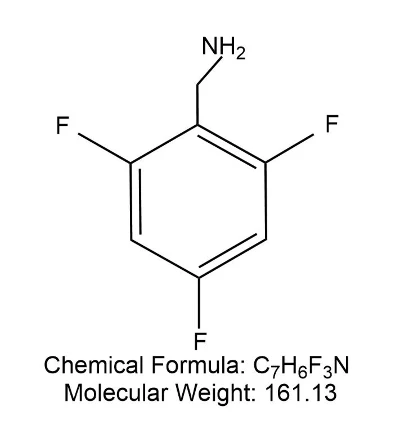
2,4,6-Trifluorobenzyl Amine: A Versatile Building Block in Organic Synthesis
Application
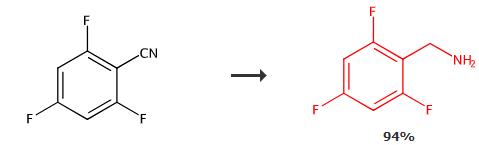
After adding 2,4,6-trifluorobenzonitrile, nickel catalyst, and solvent ethanol, the reactor should be filled with ammonia solution. After adding each reactant in turn, turn off the reactor and transfer it to a high-pressure reactor. After that, fill the reaction kettle with hydrogen until the hydrogen pressure hits 1 MPa. As you stir the reaction, raise the temperature in the high-pressure reaction kettle to 75 degrees and stay there for 12 hours. After the reaction is complete, let the reaction kettle cool to room temperature in order to gradually relieve the pressure inside the reaction system. (To increase the safety risk, open the reactor at high pressure or temperature).After the reaction mixture was extracted, the organic layer was separated using ethyl acetate and water.The organic layers were combined, dried over anhydrous magnesium sulfate, and the aqueous layer was extracted three times using ethyl acetate. After being filtered to exclude the drying agent magnesium sulfate, the filtrate was concentrated. The filtrate was then separated and purified using silica gel column chromatography. The intended product molecule 2,4,6-trifluorobenzylamine is present in the residue.
usage :The primary applications of 2,4,6-trifluorobenzylamine are as an intermediate in medicinal chemistry and chemical synthesis. It is frequently employed in the pharmaceutical sector as an intermediary in the synthesis of APIs. The strong electron attraction of the other two fluorine atoms on the benzene ring affects the fluorine atom at position 4 in 2,4,6-trifluorobenzylamine during organic synthesis transformations. This fluorine atom readily leaves the molecule when nucleophiles attack it, producing the corresponding defluorinated functionalized derivatives.Furthermore, when a large, sterically hindered strong base, like lithium bistrimethylsilylamide, acts on the amino group on the benzene ring, it can remove a hydrogen atom from the amino group. This results in the corresponding nitrogen anion, which has a strong nucleophilicity and can attack the fluorine atom at position 4 of another molecule of 2,4,6-trifluorobenzylamine in the reaction system to obtain a coupling product of the two molecules.
Physical Properties
|
Assay |
≥99.0% |
|
Boiling point |
165℃ |
|
Density |
1.320 |
|
Molecular mass |
161.13 |
|
Solubility |
DMSO(slightly), Methanol(slightly) |
|
Water solubility |
Slightly soluble in water (1.2g/L)(25℃) |
|
Package |
25kgs or according customer requirement |
|
If need more information like COA/MSDS etc,pls contact: sales01@huayangco.com |
|


Packing, Storage, Handling and Transportation
2,4,6-Trifluorobenzyl amine should be stored under inert gas (nitrogen or argon) at 2-8℃.

FAQ
Q: How to confirm the product quality before placing an order?
Q: Do you provide after-sale service?
Q: How do you treat quality complaint?
Q: Can you give me discount price?
Q: Why choose us?
Hot Tags: 2,4,6-trifluorobenzyl amine, China 2,4,6-trifluorobenzyl amine manufacturers, suppliers, factory, 3 5 Difluoropyridine 2 6 diamine, 2 4 6 Trifluorobenzyl Amine 99 0 , 98 0 Bis 1 1 2 2 3 3 4 4 4 Nonafluoro 1 Butanesulfonyl Imide CAS NO 39847 39 7, 98 Diethyl Fluormalonate CAS NO 685 88 1, 99 0 3 Fluorophenol CAS NO 372 20 3